
Metallic Epoxy Flooring in Little Elm, TX
Built Tough. Finished Beautifully.
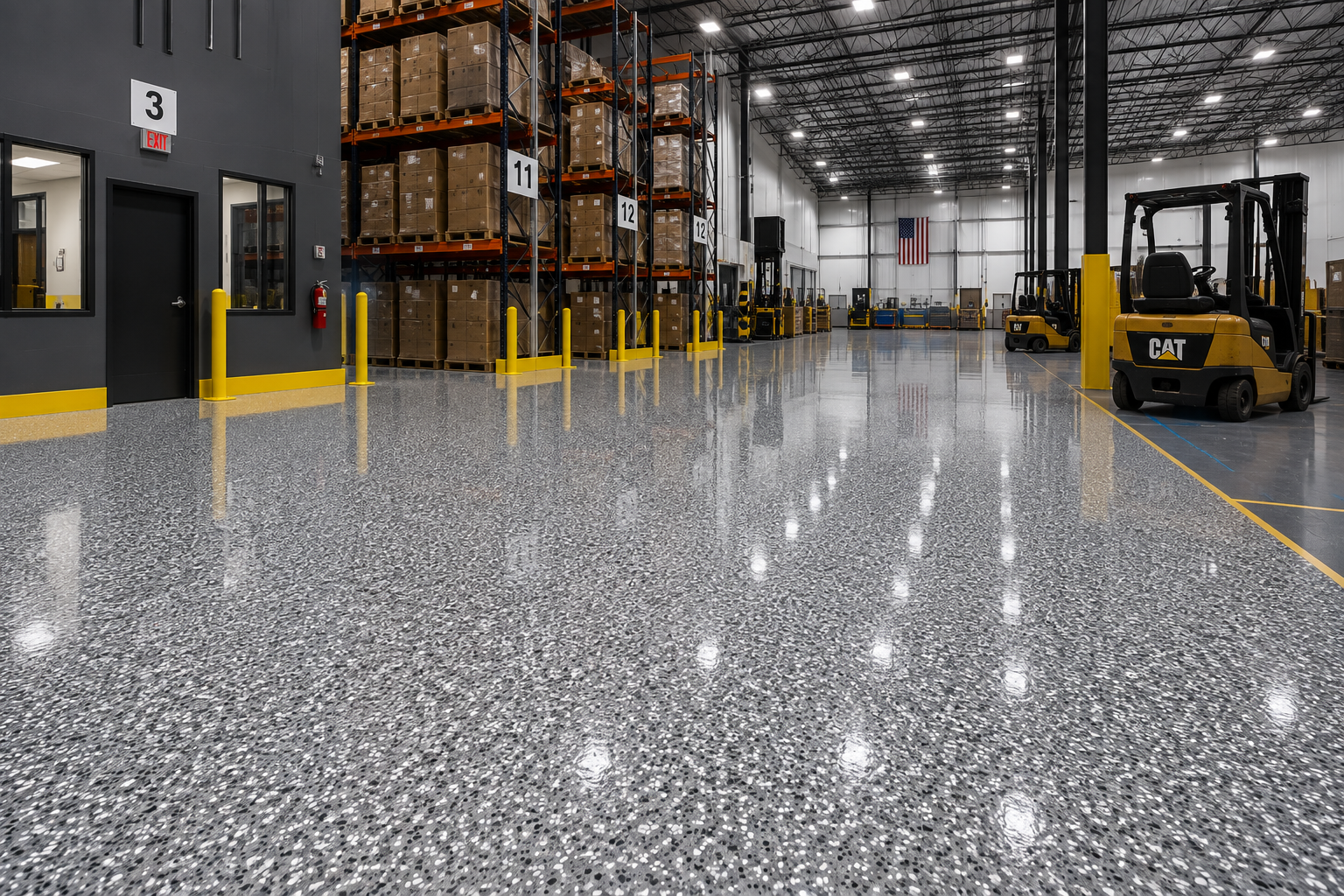
Metallic Epoxy Flooring in Little Elm, TX
Concrete floors can do more than simply provide a hard surface. With the right coating system, they can become easier to maintain, more attractive, and better suited to the way a home or business actually uses the space. Little Elm Epoxy Flooring provides information and project guidance for property owners considering metallic epoxy flooring in Little Elm, Texas, with an emphasis on matching the coating system to the concrete, exposure, traffic, appearance goals, and schedule.
Little Elm is a fast-growing North Texas community with a large stock of owner-occupied housing, newer residential development, garages, patios, retail spaces, and light-commercial properties. North Texas heat, strong sun, wind-blown dust, occasional hard freezes, and rapid temperature swings can all affect exposed concrete and the way a coating system should be selected and installed. Those conditions make product selection and preparation especially important. A coating that is appropriate for a climate-controlled interior may not be the right choice for a sun-exposed slab, and a decorative residential system may not be suitable for demanding commercial traffic.

Metallic epoxy is intentionally artistic. Pigment movement, application technique, slab conditions, lighting, and installer manipulation influence the final pattern, so exact replication of a small sample is usually unrealistic. A successful project starts with an honest assessment of the slab and a realistic discussion of how the floor will be used. That is more valuable than choosing a coating based only on a product name, color chip, or advertised cure time.


Professional Metallic Epoxy Flooring Services in Little Elm
Professional coating work combines concrete evaluation, mechanical preparation, repair, resin selection, careful mixing, controlled application, and sufficient cure time. For metallic epoxy flooring, common applications include showrooms, studios, entertainment rooms, finished basements where applicable, salons, offices, retail interiors, and residential spaces where decorative impact is a priority. The objective is to create a bonded flooring system rather than a thin cosmetic layer sitting on top of contaminated or weak concrete.
Before coating, the slab should be evaluated for cracks, spalling, old paint or sealer, oil contamination, moisture concerns, and other conditions that can interfere with adhesion. Industry guidance from the International Concrete Repair Institute emphasizes that surface preparation is a critical part of coating performance. Mechanical methods such as grinding or shot blasting are commonly used to remove weak surface material and create a profile appropriate for the selected system.
The coating specification should then reflect actual use. A lightly used residential space may have different needs than a busy service area. Some projects prioritize decorative appearance; others need faster return to service, chemical resistance, abrasion resistance, UV stability, or added texture. Little Elm Epoxy Flooring can help property owners organize those choices and request a system suited to the project rather than treating every slab the same.
Benefits of Metallic Epoxy Flooring
A properly selected coating system can provide fast curing, strong adhesion when properly matched to a prepared substrate, toughness, useful flexibility in certain formulations, and compatibility with decorative broadcast systems and protective topcoats. These benefits depend on the chemistry, film build, preparation, topcoat, environment, and maintenance plan, so no single coating should be presented as indestructible.
Easier Cleaning and Housekeeping
Bare concrete is porous and can hold dust, dirt, and many spills. A continuous resinous surface generally gives owners a less absorbent, easier-to-clean finish. Routine sweeping and appropriate cleaning can be simpler because dust and debris are not collecting in the same open pores found in unfinished concrete.
Improved Appearance
Coatings can dramatically change how a concrete area feels. Color, gloss, decorative flake, metallic pigment, and aggregate can turn a utilitarian slab into a deliberate part of the property. For businesses, a cleaner finished floor can also support a more organized customer or employee environment.
Wear and Surface Protection
Resinous flooring can add a sacrificial protective layer over sound concrete. Depending on the system, it may improve resistance to abrasion, stains, many chemicals, and routine impacts. The correct expectation is improved protection and maintainability, not a promise that the concrete can never crack or the coating can never be damaged.
Customizable Traction
Smooth high-gloss floors can become slippery when wet. Many systems can incorporate aggregate or other traction media. The appropriate texture is a balance: more texture can improve grip, while a heavily textured surface may require more effort to clean.
Where Metallic Epoxy Flooring Can Be Used
The most appropriate uses for this service include showrooms, studios, entertainment rooms, finished basements where applicable, salons, offices, retail interiors, and residential spaces where decorative impact is a priority. Suitability still depends on the individual slab and environment. Existing coatings, hydrostatic or moisture-vapor conditions, movement joints, drainage, and contamination can change the recommended approach.
For residential properties in Little Elm, coating projects often center on spaces that benefit from a cleaner, more finished concrete surface. In commercial settings, the discussion shifts toward operating hours, traffic patterns, cleaning procedures, safety requirements, and the cost of taking an area out of service. A good specification considers these factors before the installer opens a pail.
Residential Considerations
Homeowners often care about appearance, easy cleanup, comfort under normal use, and how the floor coordinates with cabinets, walls, vehicles, or outdoor finishes. It is also useful to think about future use. A garage that is currently used for parking may later become a workshop, gym, or entertainment area. Choosing a practical texture and neutral design can preserve flexibility.
Newer homes can still have coating challenges. New concrete needs adequate cure and evaluation before a resin system is applied, and curing compounds or sealers can interfere with adhesion if they are not removed. Older slabs may require more crack repair, patching, or contaminant removal.
Commercial Considerations
Commercial owners should define traffic, loads, chemicals, washdown practices, temperature, required slip resistance, and acceptable downtime. A showroom and a stockroom can be in the same building yet need different finishes. In some facilities, visual zoning, aisle markings, or contrasting safety areas can be incorporated into the flooring plan. The best commercial floor is usually the one designed around operations rather than the one with the most impressive marketing claims.
Materials, Systems, and Finish Options
Common choices for this category include partial or full flake broadcast, small or larger chip sizes, neutral or high-contrast blends, epoxy or polyurea base coats, and clear polyaspartic or other compatible protective topcoats. These materials are often used in multi-layer systems. A project may use one resin chemistry as the primer or base coat and another as the clear protective topcoat.
Epoxy is widely used because it can provide strong adhesion, build thickness, and a broad range of decorative possibilities. Traditional epoxy generally cures more slowly than fast-cure polyurea or polyaspartic materials and may amber with UV exposure unless protected or formulated for the environment.
Polyaspartic coatings are valued for relatively fast cure and, in many formulations, good UV color stability. They are frequently used as clear topcoats over decorative flake systems and can be useful where return-to-service time matters.
Polyurea coatings can cure rapidly and offer toughness and flexibility depending on formulation. Because “polyurea” describes a family of chemistries, performance should be evaluated from the actual system data rather than the category name alone.
Decorative media such as vinyl flakes or colored aggregates can add visual variation and texture. Clear topcoats protect the broadcast layer and influence gloss, cleanability, and wear. Traction additives can be incorporated where wet conditions are expected.
Planning the Look of a Metallic Epoxy Floor
Metallic flooring works best when the owner is comfortable with controlled variation. Installers can guide color palette, contrast, movement, and overall style, but the chemistry continues to flow and react after placement. That natural movement is part of the appeal.
Lighting should be considered early. Glossy metallic floors reflect overhead fixtures, windows, and daylight, which can make a room feel brighter but can also reveal surface dust or scratches more readily. A protective clear coat helps preserve the design layer and can be selected for the expected traffic.
Substrate flatness and repairs matter visually. Metallic effects can draw attention to the floor, so patched areas and surface irregularities should be handled carefully during preparation. For commercial decorative spaces, owners should also consider how future repairs will blend, because reproducing an exact artistic pattern later may be difficult.
A Typical Professional Installation Process
A professional decorative flake flooring project generally follows a sequence like this:
1. Consultation and use assessment. The contractor discusses the space, desired appearance, traffic, exposure, cleaning, timing, and budget priorities.
2. Concrete inspection. The slab is checked for cracks, weak areas, coatings, sealers, oil, moisture indicators, joint conditions, and repairs that may be needed.
3. Moisture evaluation when appropriate. Moisture can contribute to blistering, delamination, discoloration, and other flooring failures. The appropriate test and acceptance limits depend on the system and project conditions.
4. Mechanical surface preparation. Grinding or shot blasting is commonly used to remove contaminants and create a concrete surface profile that supports mechanical bond. Acid washing alone is not a substitute for proper preparation on many professional resinous-flooring projects.
5. Repairs and detailing. Suitable cracks, pits, spalls, and surface defects are repaired. Moving joints may require special treatment rather than simply being buried under rigid material.
6. Primer or base coat. Material is mixed at the specified ratio and applied within its working time and environmental limits.
7. Decorative or build layer. Flake, aggregate, metallic pigment, or additional resin is installed as required by the selected system.
8. Protective topcoat. A compatible clear or pigmented finish coat may be applied for wear, chemical resistance, UV performance, gloss, or texture.
9. Cure and return to service. Foot traffic, vehicle traffic, washing, and chemical exposure should wait until the system has reached the manufacturer-specified stage of cure. Actual procedures vary by product, slab, and project. The important point is that preparation and installation are treated as a system, not as a quick painting task.
Why Professional Installation Matters
Resinous flooring failures are often connected to substrate conditions or installation details that are easy to underestimate. Coating over a sealed slab, leaving oil in the pores, choosing the wrong surface profile, ignoring moisture, mixing components inaccurately, stretching material too thin, or applying outside the acceptable temperature window can compromise the finished floor.
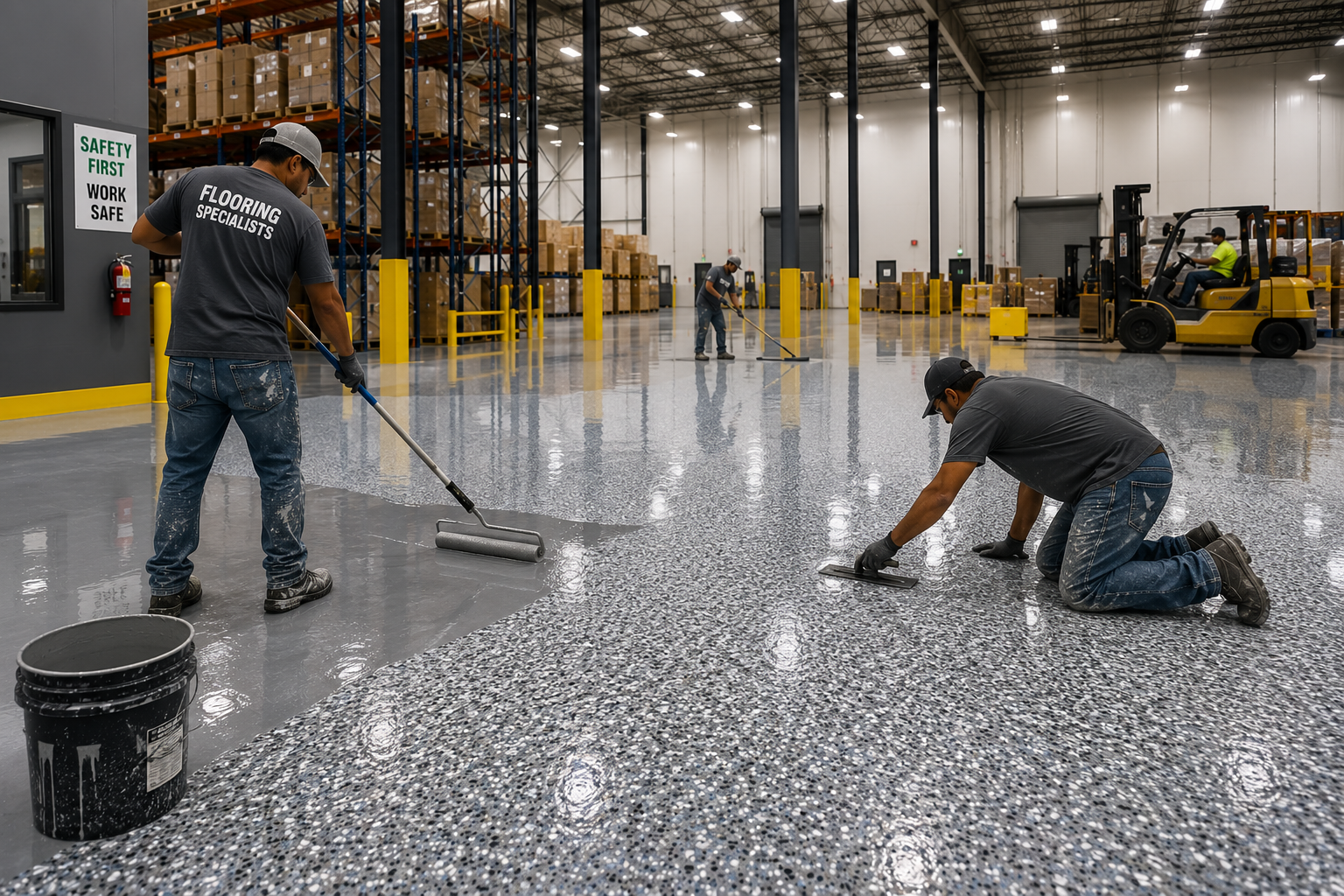
Professional equipment also matters. Mechanical grinders with dust collection, industrial vacuums, mixing tools, gauges, squeegees, rollers, spike shoes, and moisture-testing equipment allow installers to work more consistently than a basic paint-and-roller approach. Just as important, experienced installers understand pot life and recoat windows. Fast-cure products can begin reacting quickly, leaving little time to correct a mixing or application problem.
Price should be evaluated in context. A low bid that omits preparation, crack treatment, adequate material, or a suitable topcoat may not represent the same scope as a more complete system. Customers should ask contractors to explain what is included instead of comparing only the final dollar amount.
Choosing a Metallic Epoxy Flooring Contractor in Little Elm, TX
Ask potential contractors how they prepare concrete, how they determine whether an existing coating or sealer must be removed, and what they do when the slab shows signs of moisture or contamination. A credible proposal should identify the basic coating system and the number or purpose of layers rather than relying only on vague terms such as “industrial grade.”
Request clarity about cure time and return to service. “One-day floor” can describe a project schedule, but cure depends on the specific chemistry, temperature, humidity, film thickness, and manufacturer instructions. Ask when the floor can be walked on, when heavy items can be replaced, and when vehicles or aggressive cleaning can resume.
Also discuss UV exposure, especially for garage thresholds, patios, or areas receiving direct sun. Ask about texture if the surface may become wet. For decorative work, review realistic samples while understanding that slab color, lighting, flake distribution, and metallic movement can create natural variation.
Finally, make sure the scope addresses cracks and joints appropriately. Concrete moves. Some cracks can be repaired and coated, but no coating contractor can truthfully guarantee that a slab will never develop new cracks or that all movement will remain invisible forever.
Why Consider Little Elm Epoxy Flooring
Little Elm Epoxy Flooring is positioned around a straightforward goal: help Little Elm property owners choose a coating solution that makes sense for the actual concrete and intended use. That means focusing on the questions that influence performance - substrate preparation, resin chemistry, exposure, appearance, texture, cure schedule, and maintenance - instead of making unsupported promises.
Customers considering decorative flake flooring can use the estimate and consultation process to compare practical options and define priorities. Some projects call for a decorative finish; others are driven by durability or downtime. A useful contractor conversation should explain those tradeoffs in plain language.
The company name and service focus also make the page locally relevant to homeowners and businesses searching specifically for Decorative Flake Flooring Little Elm TX. Little Elm's continued residential and commercial growth means there are many different property types, from newer garages and outdoor living spaces to retail and service facilities. Each deserves a system selected for its own conditions.
Care and Maintenance
After full cure, routine care is straightforward. Remove abrasive sand and grit regularly, wipe spills promptly, and use cleaning products compatible with the installed coating. Avoid dragging sharp metal objects across the surface. Furniture, shelving, kickstands, and heavy equipment can benefit from pads or load-distributing feet where appropriate.
If the floor is damaged, address the area before moisture or impact enlarges the defect. Keep a record of the coating system and color when possible; that information can help with future repairs or recoating. Gloss will naturally change with wear, especially in traffic lanes, so maintenance expectations should match the use of the space.
For an internal-linking opportunity on the website, readers comparing this service may also benefit from the pages on Garage Floor Coatings, Residential Epoxy Flooring, Polyaspartic Floor Coatings, and Commercial Epoxy Flooring. Those links can help visitors understand differences between resin chemistries and decorative systems without forcing unrelated keywords into the copy.
Frequently Asked Questions
What is metallic epoxy flooring?
Metallic epoxy uses reflective or pearlescent pigments dispersed in resin to create flowing, marbled, cloud-like, or three-dimensional visual effects.
Will my floor look exactly like the sample?
Usually not exactly. Metallic floors are artistic and naturally variable; pigment movement, slab conditions, lighting, and application technique influence the result.
Is polyurea good for garage floors?
It can be, particularly as part of a professionally designed flake system. Substrate preparation and topcoat selection remain critical.
Where is metallic epoxy commonly used?
Showrooms, studios, salons, offices, entertainment rooms, retail interiors, and other decorative concrete spaces are common applications.
Is metallic epoxy durable?
Durability depends on the complete system, preparation, film build, traffic, and protective topcoat. Decorative appearance does not eliminate the need for performance-focused specification.
Is metallic epoxy slippery?
High-gloss smooth finishes can be slippery when wet. Texture can be added, though aggressive texture may change the visual effect.
Can metallic epoxy be used in a garage?
It can be, but vehicle traffic, hot tires, sunlight, and texture should be considered. Flake systems are often chosen when camouflage and traction are higher priorities.
How do you maintain metallic epoxy?
Dust mop or sweep, clean with compatible products, wipe spills promptly, and avoid abrasive methods that can dull the clear finish.
Can metallic epoxy be used outdoors?
Traditional epoxy is generally not the first choice for direct UV exposure because it can amber. Exterior decorative systems require UV-stable materials designed for outdoor use.
Request an Estimate for Decorative Flake Flooring in Little Elm
If you are comparing polyurea floor coatings for a home, garage, commercial property, or other suitable concrete space, contact Little Elm Epoxy Flooring to discuss the project. Share how the area is used, the condition of the slab, the look you want, and any timing concerns. A useful estimate should help you understand the recommended preparation, coating system, finish, and return-to-service expectations.
The goal is a floor that fits the property rather than a one-size-fits-all coating. Start with a conversation about your concrete and the performance you actually need in Little Elm, TX.